Seismische Verwundbarkeit gründerzeitlicher Mauerwerksbauten: Schadensanalyse des ML 5,5 Erdbebens 2020 in Zagreb, Kroatien
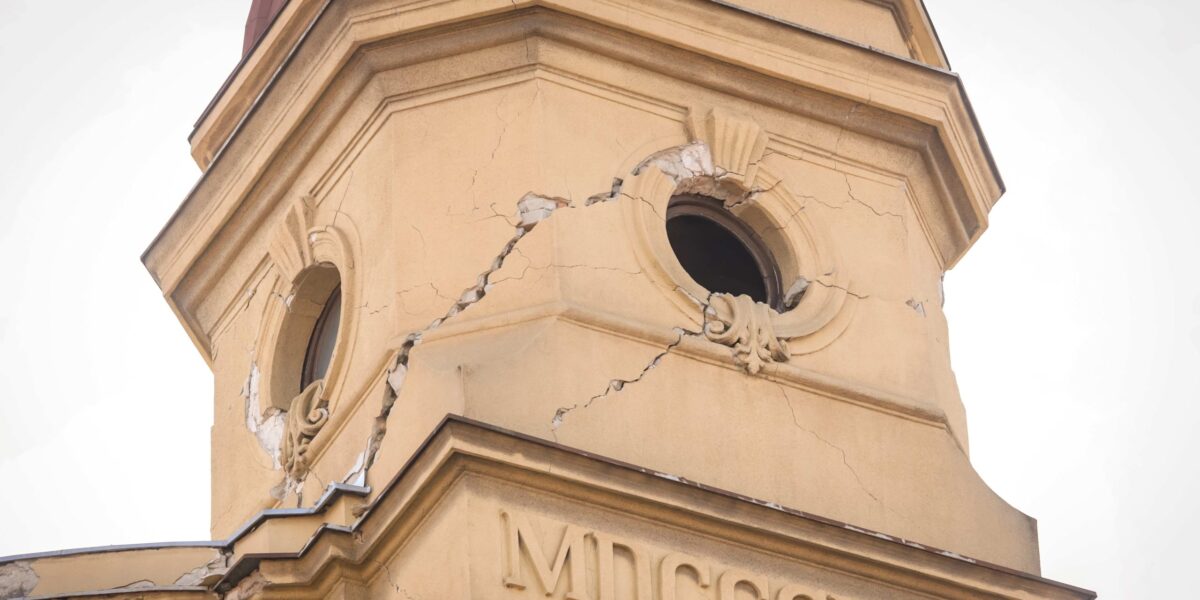
Beschätigtes Gebäude nach einem Erdbeben in Zagreb, Kroatien.
Foto: Smarterpix/GoranJakus
C. Unterweger, A. Karic, R. Heuer
Bauingenieur Jahrgang 101 (2026) Heft 01-02
Publikationsdatum: 07.02.2026
doi.org/10.37544/0005-6650-2026-01
Zusammenfassung Historische Mauerwerksbauten prägen den europäischen Gebäudebestand und sind aufgrund ihrer Bauweise besonders anfällig gegenüber seismischen Einwirkungen. Das Erdbeben vom 22. März 2020 in Zagreb, Kroatien (ML = 5,5, IEMS = VII), verursachte trotz seiner moderaten Stärke erhebliche Schäden am gründerzeitlichen Gebäudebestand. Die vorliegende Arbeit untersucht die seismische Verwundbarkeit von Mauerwerksbauten aus der Zeit der Österreichisch-Ungarischen Monarchie (≈ 1840-1918) anhand einer umfassenden Bestands- und Schadensanalyse repräsentativer Häuserblöcke im Zagreber Stadtzentrum. Aufgrund historischer Hintergründe und vergleichbarer Bauvorschriften besteht eine hohe strukturelle Ähnlichkeit zu Wiener Gründerzeithäusern. Die statistische Auswertung mittels empirischer Verletzbarkeitskurven ermöglicht die Identifikation von Schadenstrends in Abhängigkeit spezifischer Gebäudemerkmale, liefert wertvolle Erkenntnisse zum seismischen Strukturverhalten und bildet eine fundierte Grundlage für die Planung angemessener Verstärkungsmaßnahmen im Raum Wien.
Seismic vulnerability of historic masonry buildings: Damage analysis of the ML 5.5 earthquake in Zagreb, Croatia in 2020
Abstract Historic masonry buildings are a characteristic feature of the European building stock and are particularly vulnerable to seismic effects due to their construction. The earthquake of March 22, 2020 in Zagreb, Croatia (ML = 5.5, IEMS = VII), caused significant damage to the historic brick masonry building stock despite its moderate magnitude. This paper examines the seismic vulnerability of historic brick masonry buildings from the period of the Austro-Hungarian Monarchy (≈ 1840-1918) based on a comprehensive inventory and damage analysis of representative blocks of houses in the city center of Zagreb. Due to their historical background and similar building regulations, these buildings are highly comparable with historic masonry buildings in Vienna from the same era. The statistical evaluation using empirical vulnerability functions enables the identification of damage trends depending on specific building characteristics, provides valuable insights into the seismic structural behavior and forms a robust basis for the planning of appropriate reinforcement measures in Vienna.